Substack: Transformative Thinking
Weekly short pieces on Transformative Thinking
Every week I publish a short video essay on my Substack — on reframing, abundance, AI and how work is changing. A recent one, Jubilee or War?:
Every week I publish a short video essay on my Substack — on reframing, abundance, AI and how work is changing. A recent one, Jubilee or War?:
How do we live abundantly? I explore the shift from a world of scarcity to a world of abundance. From a world of lack to a world of plenty, from surviving to living, and from struggle to possibility and freedom.
Each episode, recorded on a walk, explores a concept in economics, ecology, psychology and philosophy.
Listen on Spotify, Apple, Amazon, and other providers.
List of episodes on rss.com.
Listen interactively in English →
Luister interactief in het Nederlands →
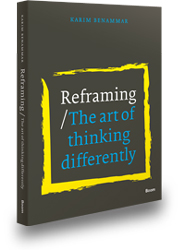
Reframing is a simple but powerful technique to think differently: an easy, four-step process that generates creative approaches for your own life and work. Reframing helps us to innovate, to approach the world from a fresh perspective and to overcome engrained patterns. Reframing allows us to develop strategies for dealing with our current challenges instead trying to solve problems which no longer exist.
‘Reframing offers me the opportunity in my work to pole vault over obstacles that have become hardened and tough over time and seek solutions from a new vision of possibility and abundance. It is the only tool I know that shifts an individual from acting as problem solver to enabling visionary change.’ (Sonali Ojha, Founder & Director, Dreamcatchers Foundation)
Reframing can be purchased at the publisher Boom and on all Amazon sites (the Kindle edition is cheaper).

Each chapter describes a condition of scarcity existing in the world today: scarcity of natural resources, of the material goods we have, in our economical systems, and in the choices we make in our lives. I show that each of these situations of scarcity is actually created: we have painted ourselves in a corner, and we now realize that we are stuck. In fact, we live in a world of overflowing energy, of abundant and renewable natural resources, and of human ingenuity. The result of actions based on a belief in scarcity is shown by the absurdity of many of our current lifestyles and economic choices. The main problem of humanity is the overflow of energy and the abundance of resources. Looking at the situation from this perspective allows us to reframe the situation so that scarcity dissolves.
This reframing from scarcity to abundance is first described for the economic problems of scarcity found in the capitalist system where we produce in order to consume and consume in order to produce. Then I show how to reframe the scarcity found in the natural world, in the lack of natural resources and in agriculture. I also show how we reframe the psychological scarcity which comes from seeing ourselves as having infinite desires.
Abundance can be purchased as a paperback and e-book on Amazon.
Read Abundance interactively →
Read the first chapter below by clicking Read More
…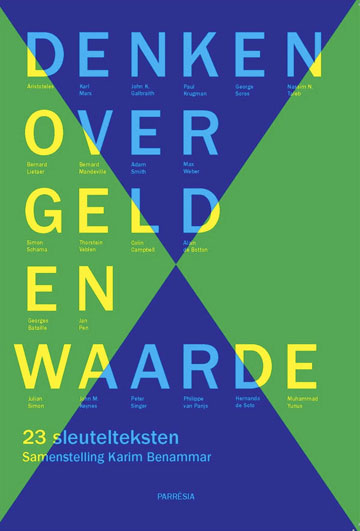
How is value – both that which is valuable for human beings and that which has financial value – created by means of resources, work, and ideas? Human beings can decide to spend their energetic surplus according to their own choices. A human being is a homo creator who gives shape to his or her life by making conscious choices for themselves and for their community.
Thinking about Money and Value (published in Dutch; English introduction) I have selected 23 key texts of economists, philosophers, bankers and sociologists that give us insight into this question.
Read the Introductory chapter in English below by clicking Read more.
…
“I am the sound of children’s babble, the lullabies of mothers and the naked whispers of men.“
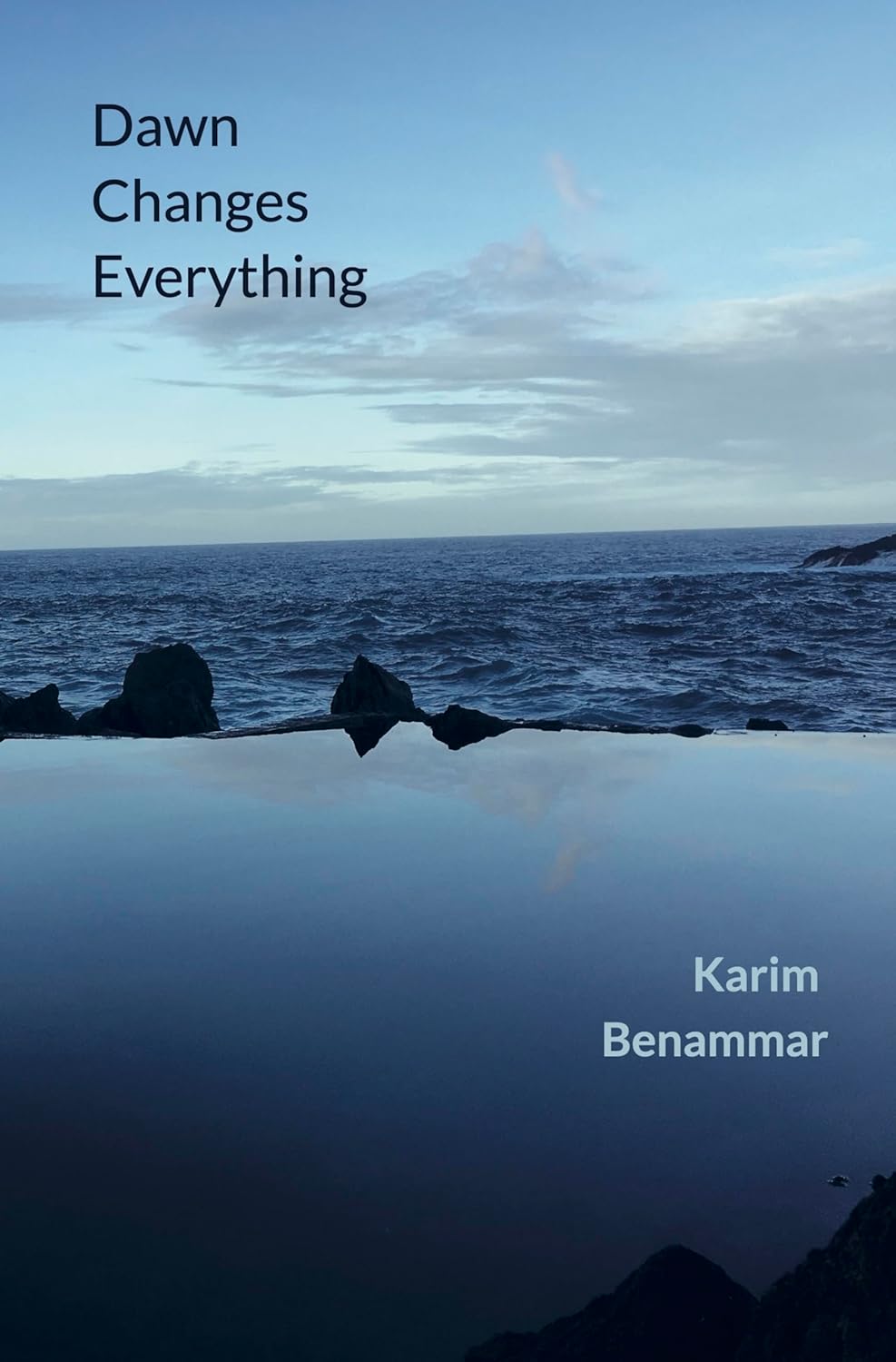
Dawn Changes Everything is a collection of miniature mediations on the magic that everyday situations evoke in us. In turn ecstatic, playful, nostalgic, and erotic, these pieces of poetic prose explore time, memory, and our sensory experience of the world.
Dawn Changes Everything is available as paperback and e-book on Amazon
Click Read More for a selection of pieces
…Transformative thinking in three steps:
1. Analyse why we do things now
2. Radically change our thinking
3. Experiment with a radical new approach
Reframing: we challenge our current assumptions to generate radically new approaches.
Reframing AI : we rethink and redesign our workflow from performing tasks to managing AI-augmented output.
Paradigm Shifts: we identify internal or external shifts and design approaches to fit the new paradigm.
Simplify: we ruthlessly examine our current workflow in order to work smart, not hard.
Shaping our Future: we explore how to turn our core individual or corporate purpose into impactful action.
Climate Positivity: we investigate how we can impact the climate crisis at scale through our professional role.
Interactive lectures combine a slide presentation with several rounds of pair discussion and plenary debriefs. They last between 45-75 minutes, can be given live or online, and scaled from dozens to hundreds of participants.
Workshops follow the same topics and structure as interactive lectures but have much deeper analysis and group discussion. They include preparatory research into organisational priorities, sector shifts and future strategies, and have the most impact at pivotal points for teams or organisations. Workshops are better live but can be given online, take 2 to 6 hours, and are scalable from small groups of 6 to dozens of participants.
Worldwide clients include tech: Nokia, Amazon AWS, Oracle; consulting: EY; PwC; banks: Rabobank, Handelsbanken; pharma: Amgen, teva; service: JustEatTakeaway; housing corporations; secondary education; government: European Commission, Dutch ministries, municipalities; and business schools: AOG School of Management, Nyenrode University.
Artificial intelligence is profoundly changing our work. We can use AI to automate repetitive tasks, and to augment ourselves by working faster and producing more. The real shift, however, is reframing work: combining our human imagination and conscious needs with the powerful capabilities of AI models. That means moving from performing tasks to managing output, from doing everything ourselves to conducting a team of tireless assistants, from doing to asking. In this interactive lecture we explore the potential and pitfalls, where to start experimenting in your daily work, and how to make the shift to a profession which will never be the same.
Why do we do the things that we do? And: how could we do things differently? All of our thinking and actions are based on assumptions, most of which remain unexamined. We analyse our assumptions in order to reframe our approach and experiment with new actions. We do this with personal, team and organisational projects.